

How To Create Recovery Media Windows 10
Quick Navigation:
- What is Windows 10/11 recovery disk?
- New ways: Create Windows 10/11 recovery disk effectively
- Old way: Create system repair disc in Windows 10/11
- Restore Windows 10/11 using recovery drive
- A problem occurred while creating the recovery drive?
- FAQs related to Windows 10 recovery disk
- Conclusion
What is Windows 10/11 recovery disk?
In literal terms, Windows 10/11 recovery disk is a bootable disk contains Windows recovery options, which enables you to troubleshoot system errors and even reinstall Windows 10/11 from startup.
But since Windows 8, Windows has added a new feature to create recovery drive using USB. It is now becoming a more mainstream approach in Windows 10/11 due to the portability. Of course, if you do not have any USB drive or simply want a recovery disk, you can still use CD or DVD to create a system repair disc.

Both of these Windows 10/11 recovery media allow you to use Windows recovery options even when your computer fails to boot. But there are some differences between them:
- First, the recovery drive requires a USB drive while the system repair disc needs CD/DVD. It's an old medium that is not widely used now.
- Second, the recovery drive is able to backup system files necessary for Windows reinstallation. Therefore, if you cannot restore your computer, it still allows you to reinstall Windows 10/11 with "Recover from a drive" option.
- Third, the recovery drive is tied to the current PC while the repair disc can be used on the same version of Windows.
This shows, it's best to create both system repair disc and recovery drive, and it's best to recreate one every year, because Windows updates will improve security and PC performance periodically.
In addition, it's a great idea to backup files in Windows 10/11 regularly to ensure its security. That's because the recovery drive isn't a system image, which does not contain your personal files, system settings, or programs.
New ways: Create Windows 10/11 recovery disk effectively
There are two methods new to create Windows 10/11 repair disk for your reference.
- Using the Windows built-in tool - Recovery Media Creator.
- The free third-party backup software named AOMEI Backupper Standard.
If you want to create Windows 10/11 recovery USB that can boot any version of Windows system, you can go to Method 2 directly.
Some users may concern about the Windows 10/11 recovery USB size. While creating a recovery drive, the program will copy a lot of files to the USB drive, so you need to prepare a flash drive that hasat least 16 GB capacity, andensure it's empty, because all the data on the USB drive will be deleted in this process.
Way 1. Create Windows 10/11 recovery drive with recovery media creator
1. Connect the USB drive to your computer and get access to the recovery drive. You may be asked if you want to allows this app to make changes to your device, please click "Yes". Here are two ways you can use:
>> Type "recovery drive" into the search box and select "Create a recovery drive".
>> Go to "Control Panel", select "View by smaller icons" and "Recovery", then choose "Create a recovery drive" in the advanced recovery tools page.
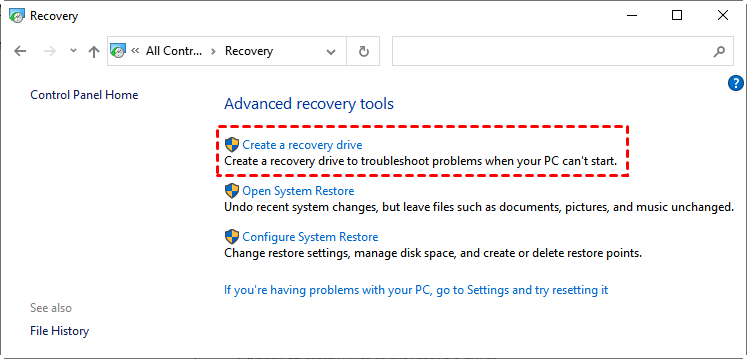
2. In the pop-out window, check the option "Back up system files to the recovery drive" and hit "Next".

Note: The option "Back up system files to the recovery drive" will create a recovery drive that allows you to reinstall Windows.
3. Then select the USB flash drive you prepared, and click"Next" to continue.
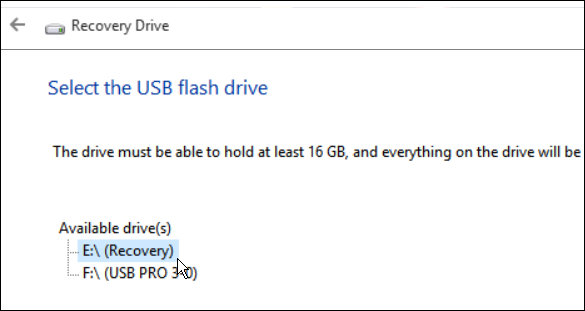
4. On the next screen, you will be told everything on the drive will be deleted, so please make sure there is no important data. Then, click "Create" to begin creating Windows 10/11 recovery USB drive.
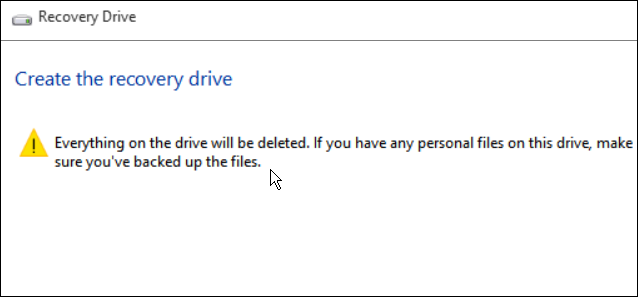
After finishing this process, you will see an option "Delete the recovery partition from your PC" if you have a Windows recovery partition in Windows 10/11 computer. You can click it to delete recovery partition to free up some space on your computer.
When your computer fails to boot, you can restore Windows 10/11 to new hard drive using this recovery USB: plug into your computer, change boot order in BIOS to boot your system from USB drive and follow on-screen instructions to finish the restoration.
However, you may find the Windows 10/11 bootable USB is not working. For example, you cannot use a Windows 8 recovery disk to restore Windows 10, nor can you use a recovery drive made by Windows 10 64-bit to boot a 32-bit computer. That is to say, you cannot create a Windows 10/11 recovery USB disk from another computer with the built-in tool.
Way 2. Create Windows 10/11 boot repair disk via AOMEI Backupper
As mentioned, the Windows 10/11 repair USB created by the built-in tool (recovery media creator) will not work on different systems. If you want a more flexible way, you can choose to use a third-party media creator tool - AOMEI Backupper Standard.
With it, you can not only create Windows 10/11 recovery USB for the current computer but also another PC, and it can be applied to all the Windows PCs, including Windows 11/10/8/7 (both 32 bit and 64 bit). And you still can enjoy the following advantages:
✭ It enables you to create bootable media using DVD/CD or USB drive, and with which you can easily restore Windows 10/11 to new hard drive when your computer is unable to boot.
✭ It allows you to create HP Windows 10/11 recovery drive and also for other brands of computer, such as, Lenovol, Acer, ASUS, Dell, etc.
✭ The created media creator is able to help you boot computer from BIOS and UEFI mode.
✭ If your system crashes before you made a recovery drive, you can create a Windows 10/11 recovery USB disk from another computer to boot the computer having problems.
✭ Also, if you don't have CD/DVD or USB drive, you can use AOMEI Backupper recovery environment to achieve the same effect as recovery disk
✭ It allows you to create multiple types of backups including system backup, disk backup, file backup and partition backup. And you can save the backup to various locations, such as your local disk, external hard drive or network shared folder, etc.
Then, learn how to create Windows 10/11 recovery USB with AOMEI Backupper below:
1. Download Windows 10/11 recovery USB media creator - AOMEI Backupper, install and run it.
2. Click "Tools" from the left panel and then select "Create Bootable Media".
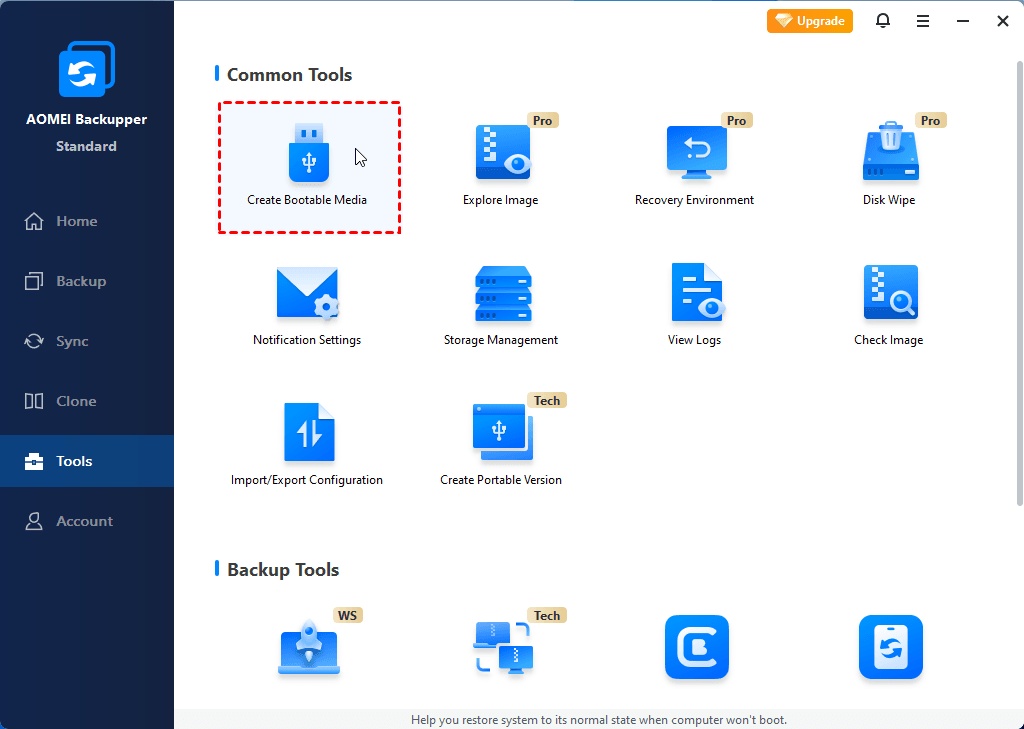
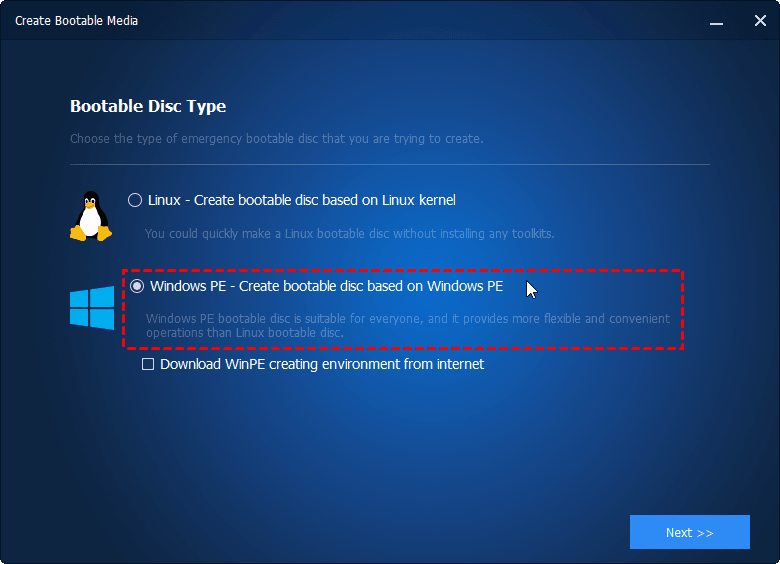
3. Select bootable disc type from Linux based or Windows PE based, and click "Next". Linux based bootable media only allows you to use basic functions of AOMEI Backupper, while Windows PE allows you to access full functions.
4. Then you can select a "CD/DVD" or "USB drive" to create this Windows 10/11 bootable recovery media and then click "Next" to run this process.
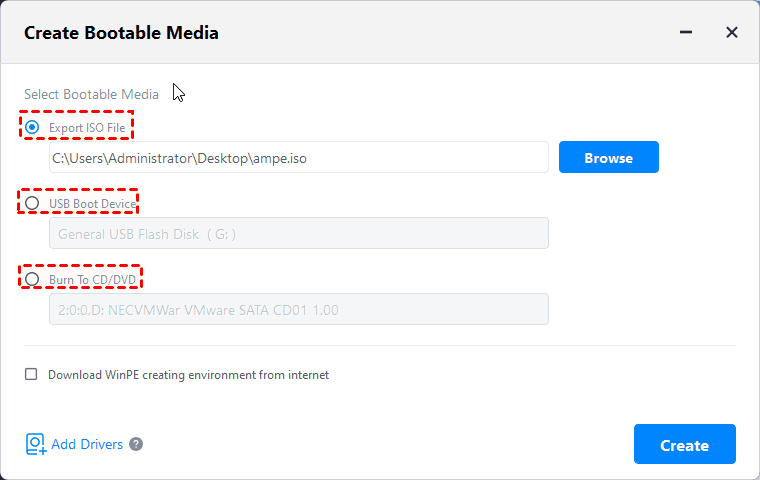
Note: If you don't have CD/DVD or USB, you still can choose to create Windows 10/11 recovery ISO by exporting it as ISO file.
With the help of AOMEI Backupper, you could create Windows 10/11 recovery USB for current computer or another PC beforehand just in case of system failure. Also, you can also create Windows 10/11 repair disk on another computer to boot the computer having problem.
Old way: Create system repair disc in Windows 10/11
1. Prepare a USB drive with at least 16GB and connect it to your computer. Please be sure it can be detected.
2. Type " backup settings" in the search box and select it. Then, scroll down to "Looking for an older backup" and click "Go to Backup and Restore(Windows 7)".
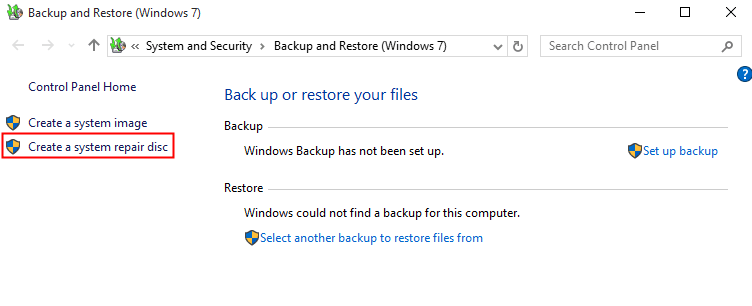
3. Click "Create a system repair disc" at the left panel of Backup and Restore (Windows 7) page.
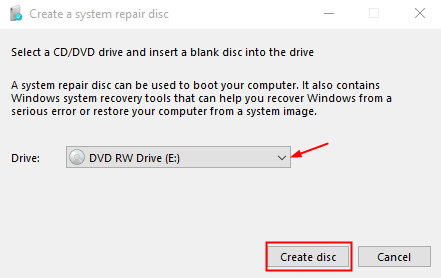
4. Then, you will be asked to select a CD/DVD drive and insert a blank disc into the drive, please do as instructed.
5. Click "Create disc" to create Windows 10/11 recovery disk with CD/DVD. Then, it will start to write this disc, this process only takes a few minutes.
Restore Windows 10/11 using recovery drive
After creating Windows 10/11 recovery USB, you may want to know how to use it. Then, I'll show you two common ways, namely, using recovery drive or repair disc, and third party rescue disk. For more details, please continue to see below.
Way 1: Use Windows recovery USB or repair disc
1. Insert your recovery drive or system repair disc. Then, press the displayed F key on the initial screen when you start computer, then change the recovery drive or disc as the first boot option in the BIOS and boot from it.
2. Then, it will start to the Windows recovery environment, select keyboard layout and hit "Enter".
3. In the blue Troubleshoot page, you will see "Reset this PC", "Recovery from a drive" and "Advanced options".
Both of the previous two options are to reinstall Windows, but the first one allows you to choose to keep or remove your files. The third option is to repair your computer using recovery tools, such as, system restore, system image recovery, startup repair, command prompt etc.
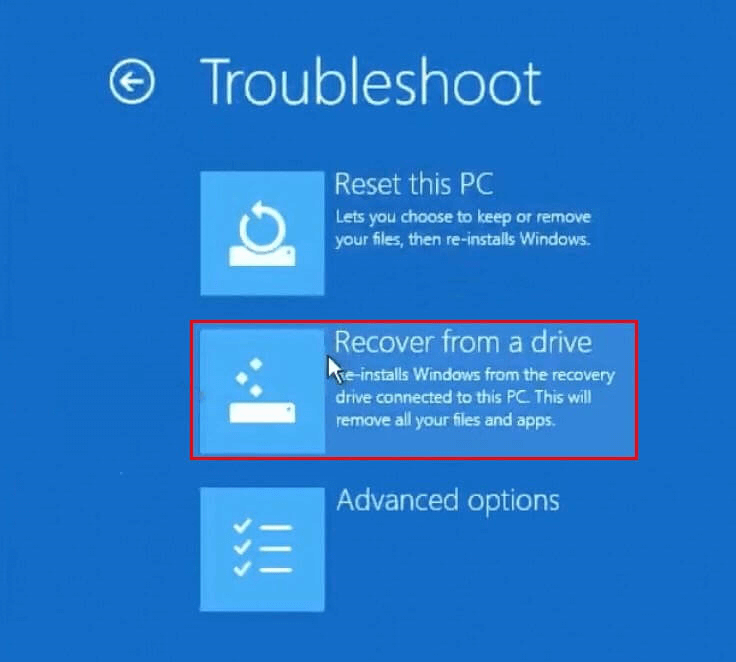
4. Take "Recover from a drive" as an example, click it. Then, select "Just remove my files" to delete only files on your computer. If you want to fully recycle this operating system, you can choose "Fully clean the drive".
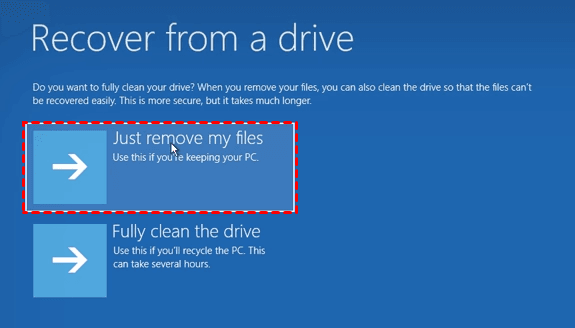
5. Click "Recover" to start the recovering process. It will take a while to finish and your PC will restart. Please follow the on-screen instructions to configure your preference settings.
Way 2: Use third-party recovery drive
1. Connect the backup drive containing the system image and recovery disk to your computer. Then,boot your computer with the disk created by AOMEI Backupper.
2. Once the file loading process completes, you will see the main page of AOMEI Backupper Standard. You can click "Restore" and "Select Image File" to find the system image created ahead of time.
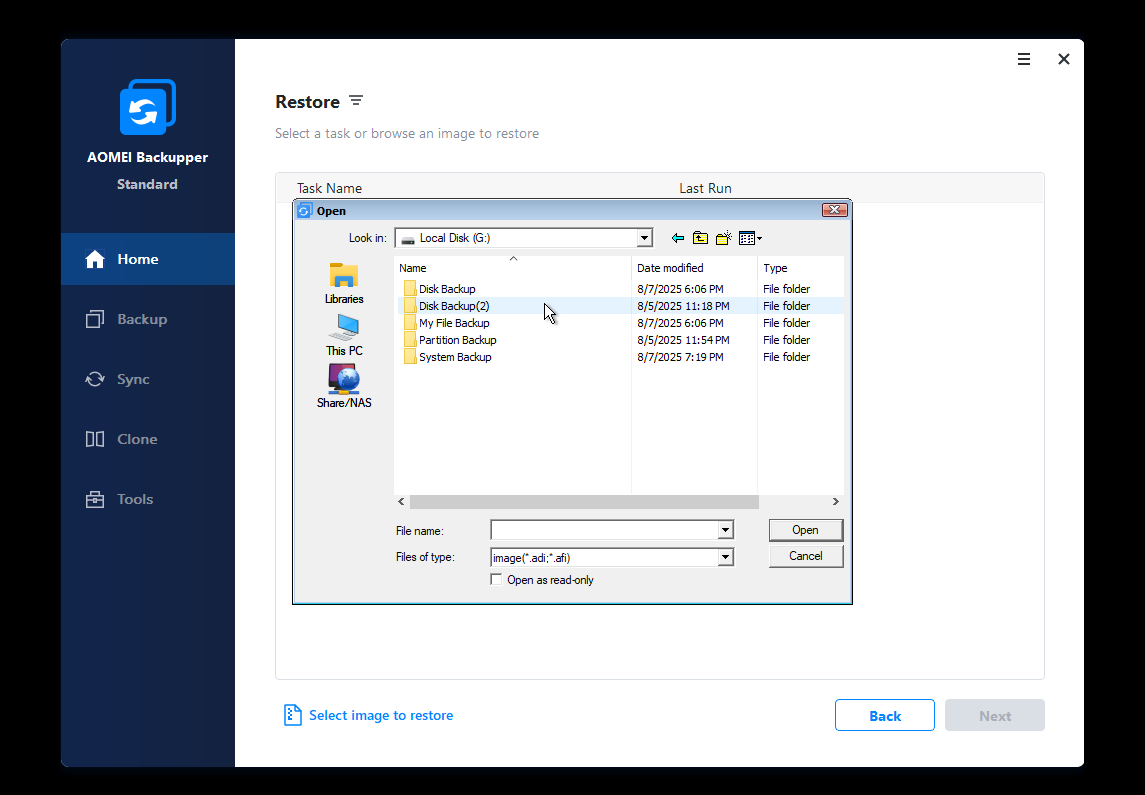
3. Select "Restore this system image" and tick "Restore system to other location" if necessary, then click "Next".
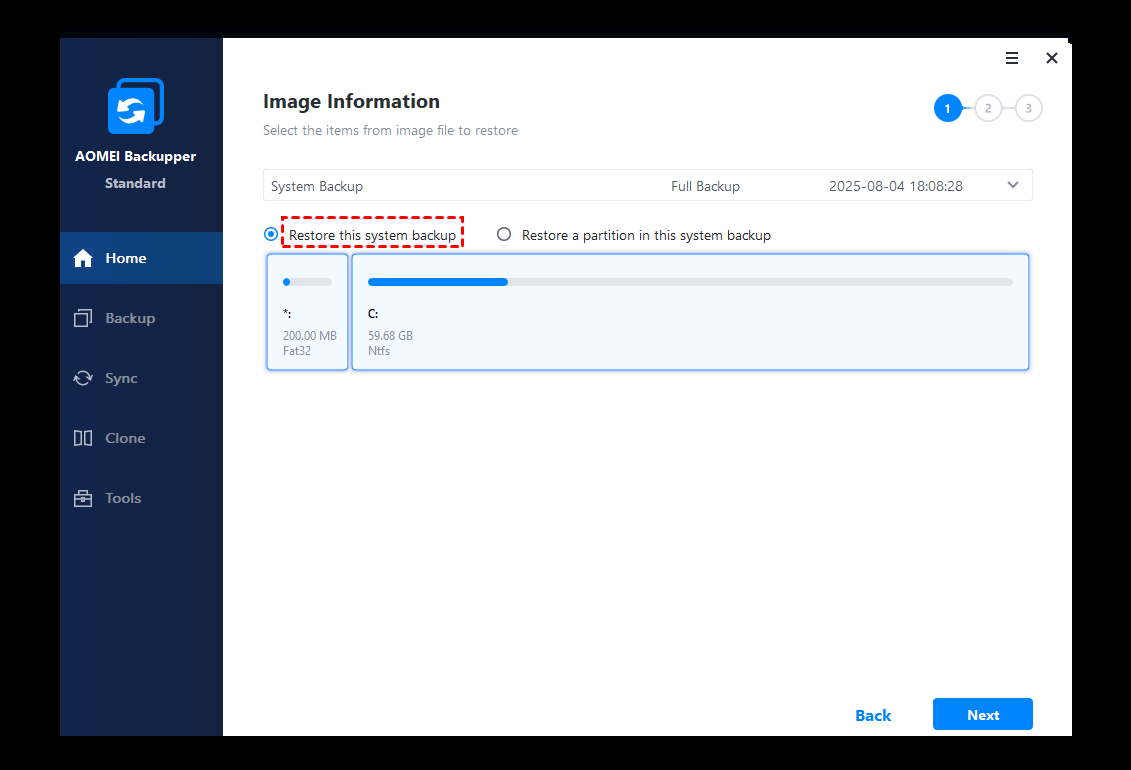
4. (Optional) To restore system to a different location, select a destination disk to store the backup image and click "Next". If the destination disk is a new one, please connect it in advance.
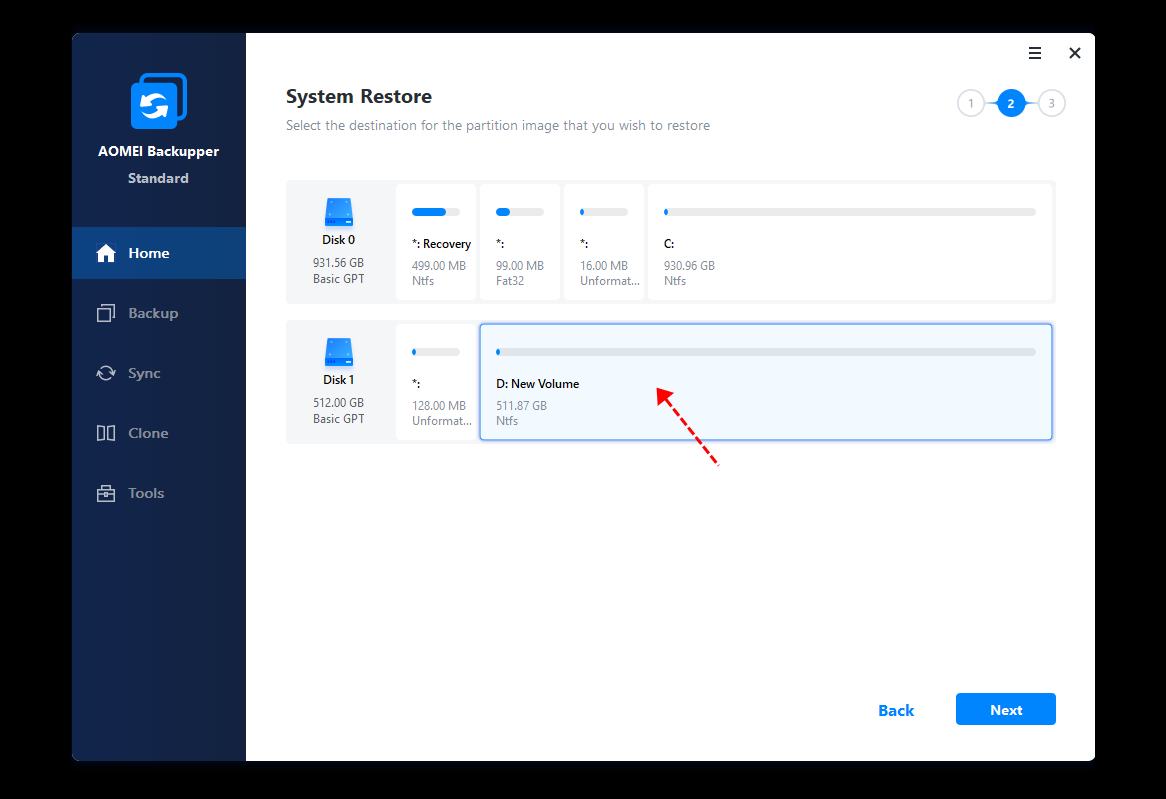
5. If you are restoring system to an SSD, tick "SSD Alignment" to accelerate the writing and reading speed of SSD disk. Then, click "Start Restore" to restore system image using recovery disk.
Relate tip:
If you need to restore system image to another computer with different hardware, the steps are almost the same, but remember to tick "Universal Restore" (supported by Professional edition). If will ensure the computer can boot after restoration.
A problem occurred while creating the recovery drive?
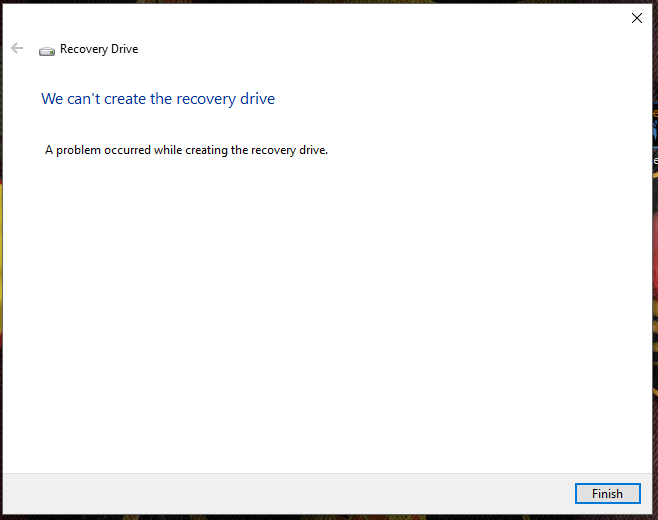
Sometimes, users may find that they are not allowed to create recovery disk in Windows 10/11 and the built-in tool says, "We can't create the recovery drive. A problem occurred while creating the recovery drive". Don't worry, and get corresponding solutions below.
Solution 1. Check the USB drive
If Windows failed to create a recovery drive with an error "We can't create the recovery drive", you should firstcheck whether your USB drive is well connected and can be recognized by Windows. If that is not the case, you can simply download the Windows 10/11 recovery disk ISO file and burn it to your USB flash drive or CD/DVD. If you do not want to download an unofficial file, then you can try following solutions.
Solution 2. Enable Windows recovery environment
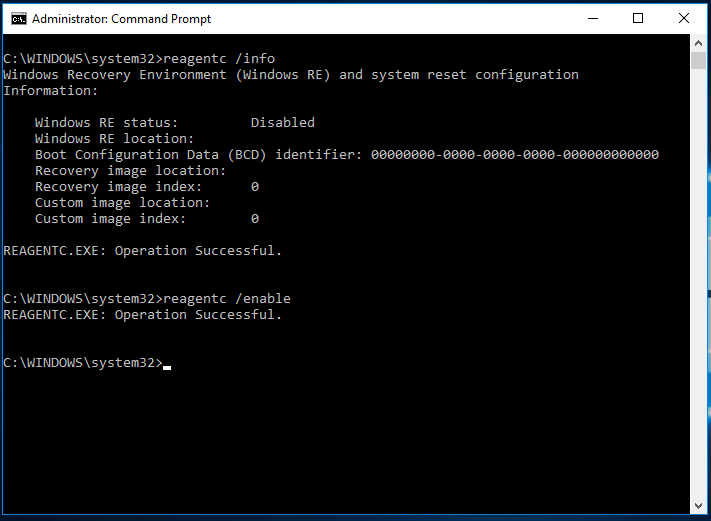
Another likely cause of this problem is that Windows recovery environment is disabled. You can run command "reagentc /info" in an elevated Command Prompt to check it. If the Windows RE is disabled, you can type "reagentc /enable" to reenable it. After that, you can boot into recovery environment. If this also fails, you can turn to Solution 3.
Solution 3. Create Windows recovery environment with installation ISO file
1. Create a folder named WindowsRE under the Recovery folder of C: drive. The Recovery folder is hidden by default. To show it, you can:
-
Search "show hidden files" from the search box and select the top result.
-
In the pop-up window, click "Show settings" next to "Change settings to show hidden and system files" to open File Explorer Options.
-
From there, check the option Show hidden files, folders, and drives, and uncheck the option Hide protected operating system files (Recommended).
Tip: If you still don't see the Recovery folder, you can create one under the root directory of C: drive.
2. From this step to Step 4, you will create a Winre.wim file. If you have that file backed up or you cancopy it from another Windows 10/11 computer, you can just skip to Step 5. If you do not have one, you can download installation ISO file from Microsoft. Then, double-click to mount it as a virtual drive.
3. In the Source folder, locate the file Install.wim. Copy the Install.wim file's location path.
4. In an elevated Command Prompt, use the following syntax:
dism /mount-wim /wimfile:[the install.wim file path you just copied] /index:2 /mountdir:[a location path to save the mounted file]
In my case, it is:
dism /mount-wim /wimfile:"F:\windows 10 ISO\sources\install.wim" /index:2 /mountdir:D:\mount_image_file\
5. From the location you entered at the end of the above command, find the Winre.wim file and copy it to "C:\Recovery\WindowsRE".
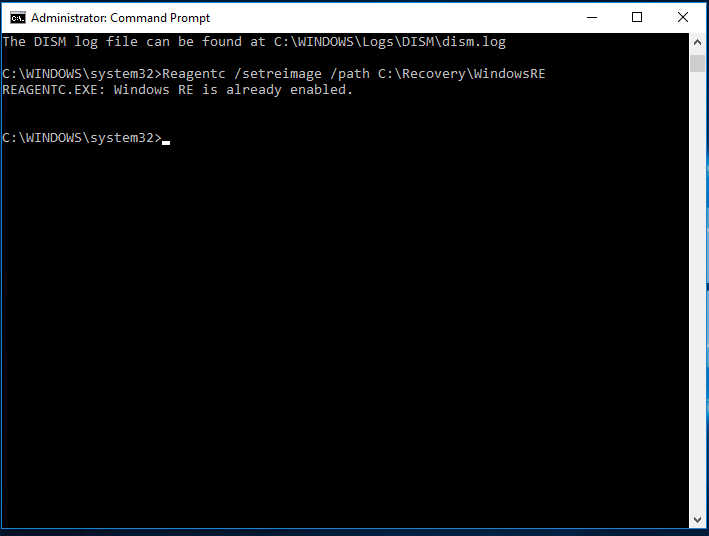
6. Then type command Reagentc /setreimage /path C:\Recovery\WindowsRE and press Enter. After that, you should be able to create a recovery drive in Windows 10/11 successfully.
Solution 4. Fix to failed to include system files
If you can create a Windows 10/11 repair USB drive without including system files, but fail to create it when you check the option "Back up system files to the recovery drive", then you can try the following.
1. Copy the install.wim file from the Windows 10/11 installation file to a folder on your hard drive. Say it "D:\Windows-OS-image".
2. Open an elevated Command Prompt, typeReagentc /setosimage /path D:\Windows-OS-image /index 1 and press Enter.
After that, you should be able to include the system files on the recovery drive, so you can use the recovery drive to ret Windows 10/11 without requiring anything on your hard drive.
FAQs related to Windows 10 recovery disk
What is a Windows recovery disk?
Windows Recovery Disk is a storage device that contains Windows exact copy and troubleshoot tools for you to fix system problems and reinstall Windows to restore system back to normal.
How to create a Windows 10 recovery disk?
First. plug your CD/DVD or USB flash drive into your Windows 10. Second, input the recovery drive in Windows 10 search box, select Create a recovery drive. Then, ensure the Back up system files to the recovery drive option checked, and hit Next. Choose the device you connected and press Next. Finally, tap Create to create a Windows 10 recovery disk.
Can I create a Windows 10 recovery disk on one computer and use it on another?
It's hassle. Because the two computer has to be the same make, model, even the drivers, and the devices installed. The free backup software for Windows - AOMEI Backupper Standard provides the easiest way to create recovery drive from one computer and use it on another no matter what the Windows OS is.
How to fix a problem occurred while creating the recovery drive?
First of all, please check the media connected well. If still not working, try to fully format the USB drive/CD/DVD. Or repair the recovery environment first, and enable it; The ultimate way is create Windows recovery drive with the installation ISO file.
Conclusion
That's all for how to create Windows 10/11 recovery disk. If you prefer to create Windows 10/11 recovery disk for another computer, or one works on any version of Windows system, it is highly recommended to use AOMEI Backupper to create one for them all instead of creating one by one (like Windows 10 repair disk for Windows 10, and another Windows 8 recovery disk for Windows 8). Whenever your system fails to boot, AOMEI Backupper can help you restore system from the recovery disk with no effort.
If you want to protect unlimited computers within your company, you can pick AOMEI Backupper Technician Plus. With the inbuilt AOMEI Image Deploy tool, you are also allowed to deploy/restore system image file on server-side computer to multiple client-side computers over network.
How To Create Recovery Media Windows 10
Source: https://www.ubackup.com/windows-10/create-windows-10-recovery-disk-4348.html
Posted by: wilkeswhoundle.blogspot.com
0 Response to "How To Create Recovery Media Windows 10"
Post a Comment